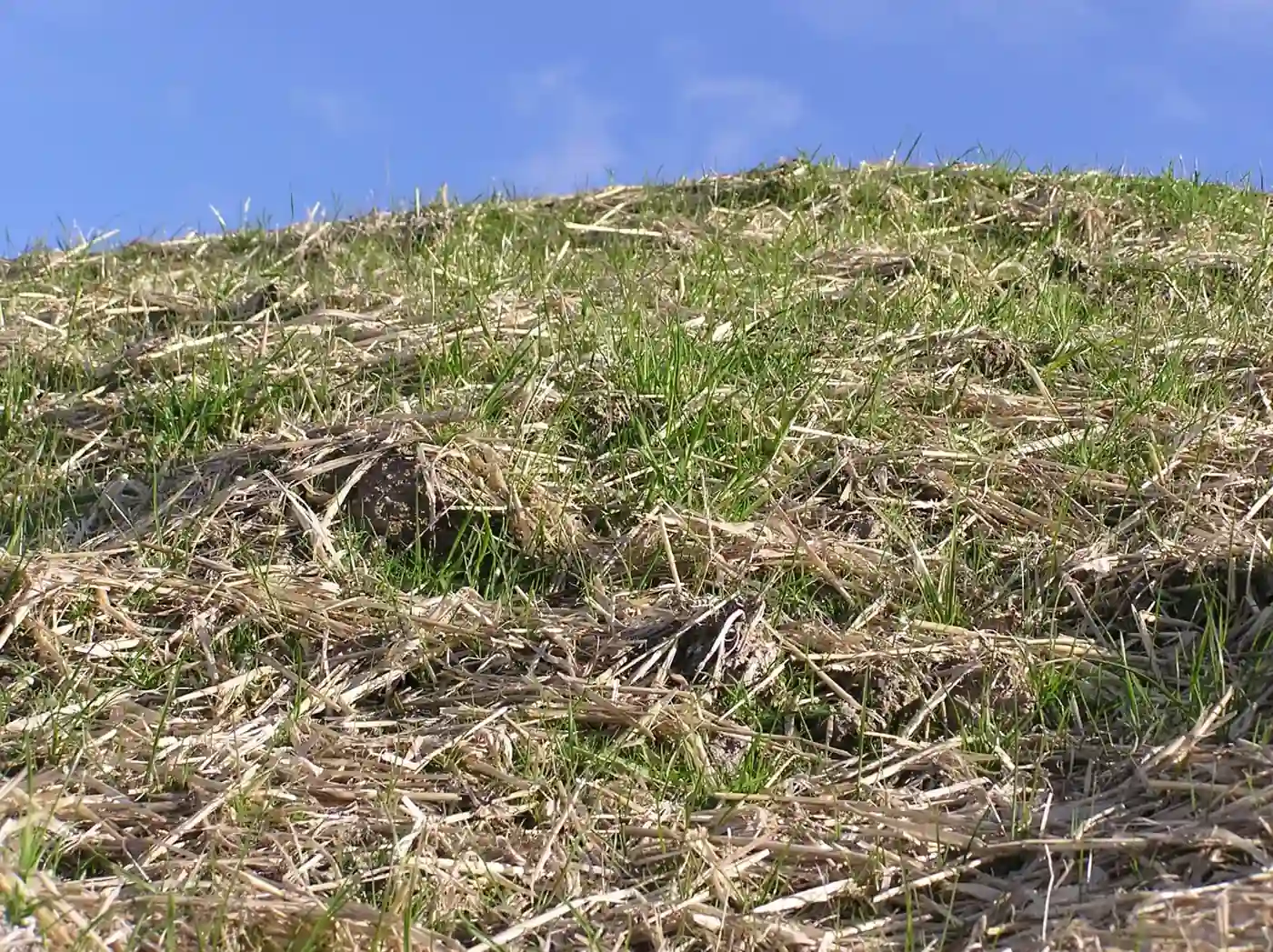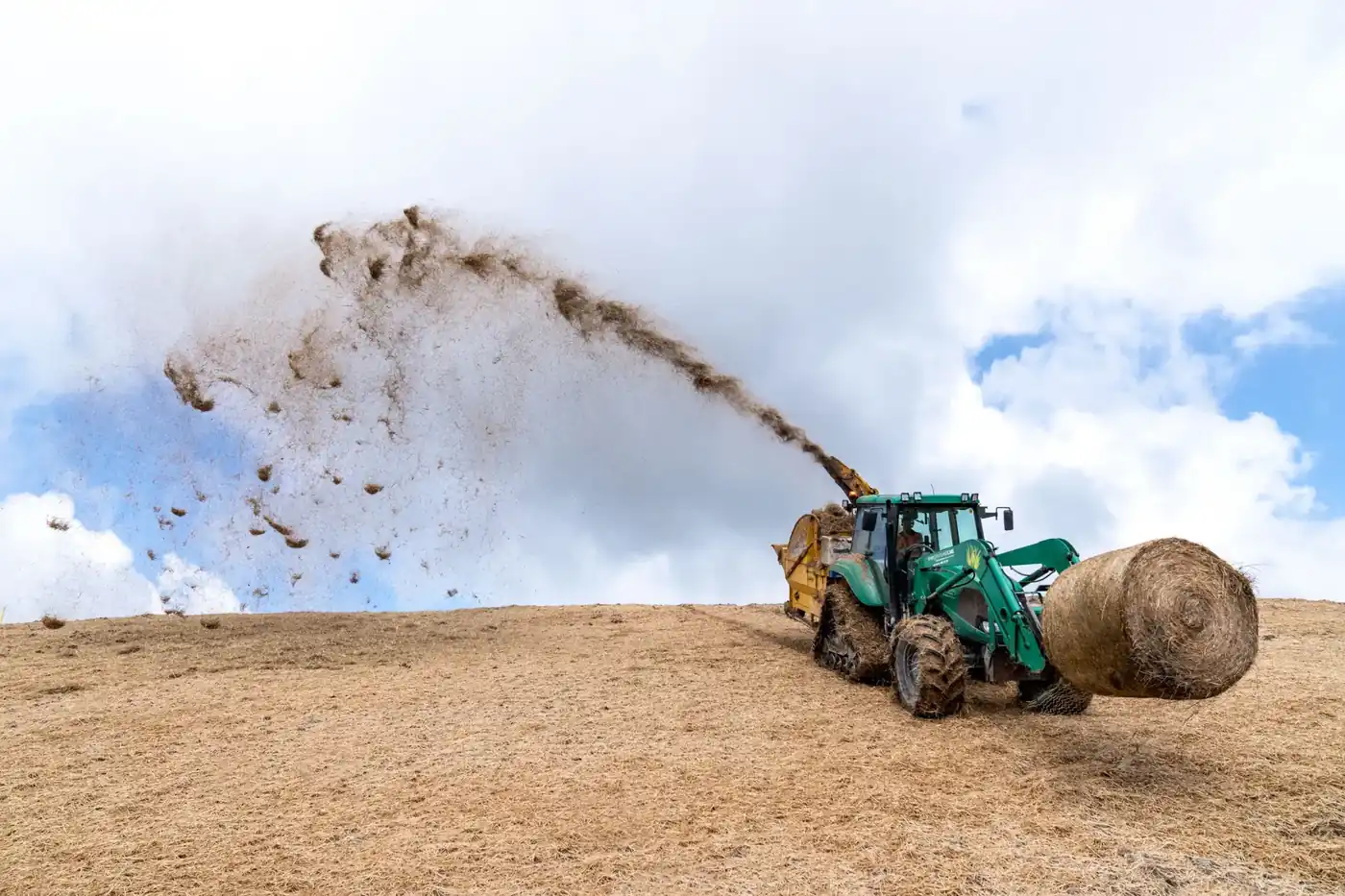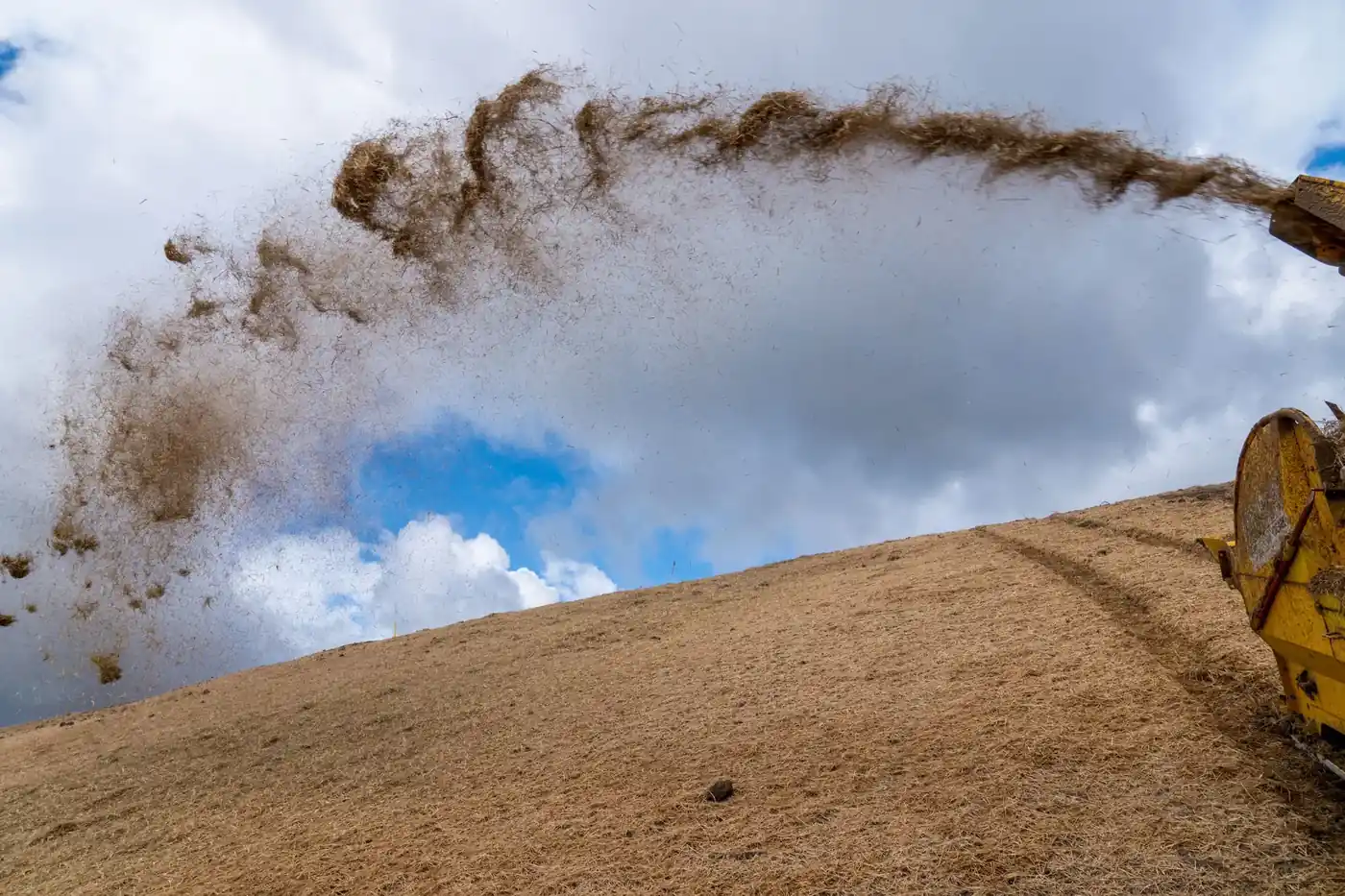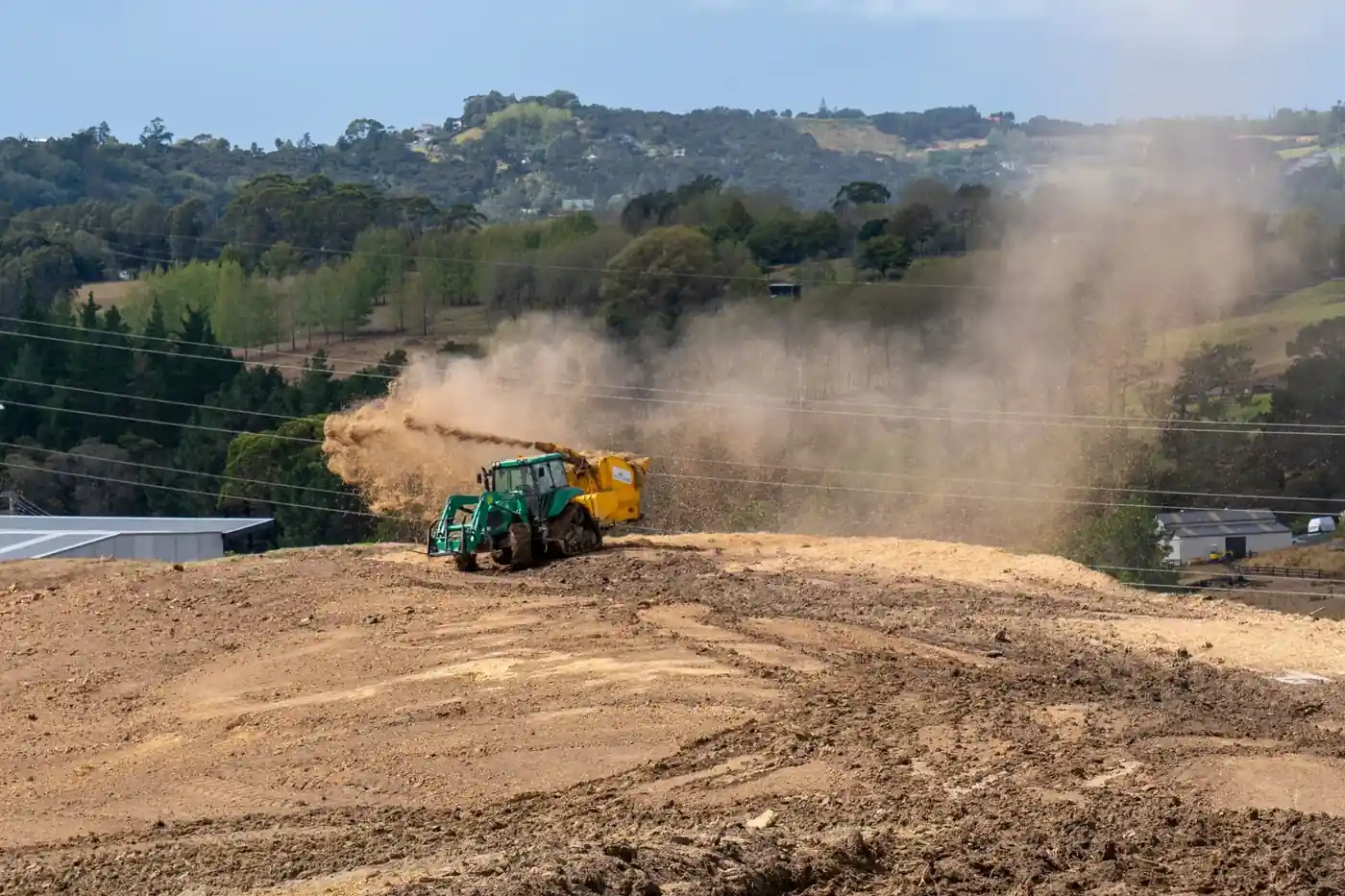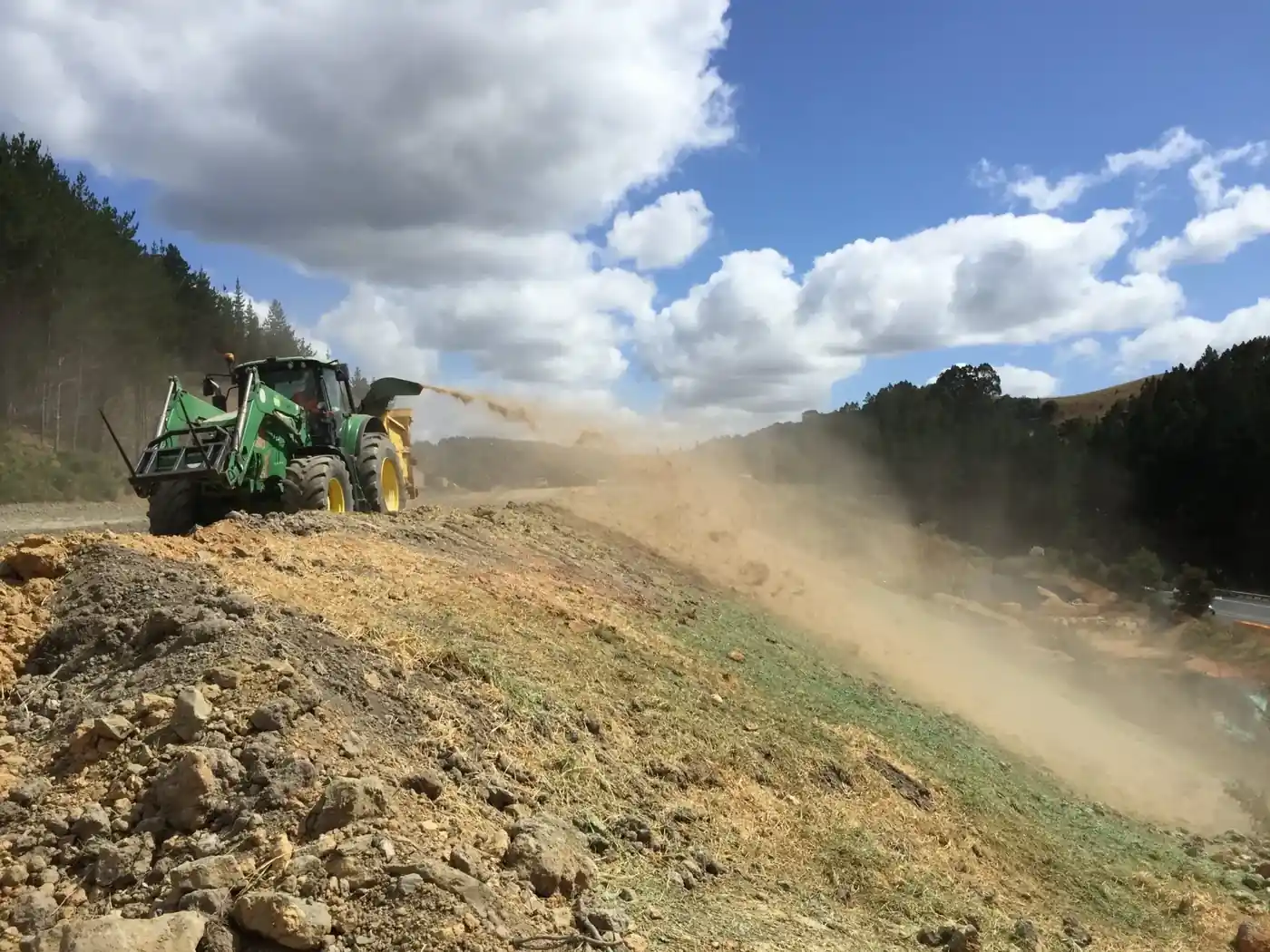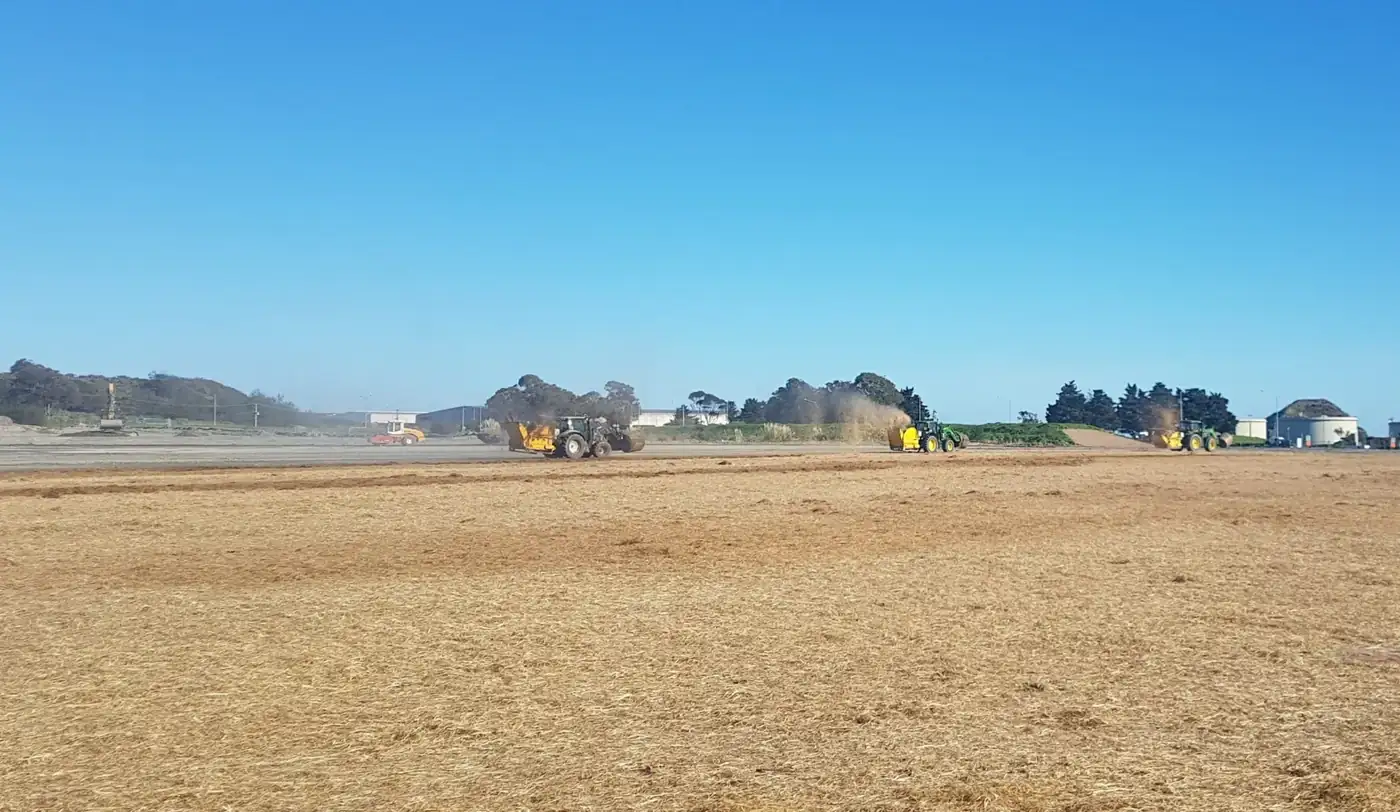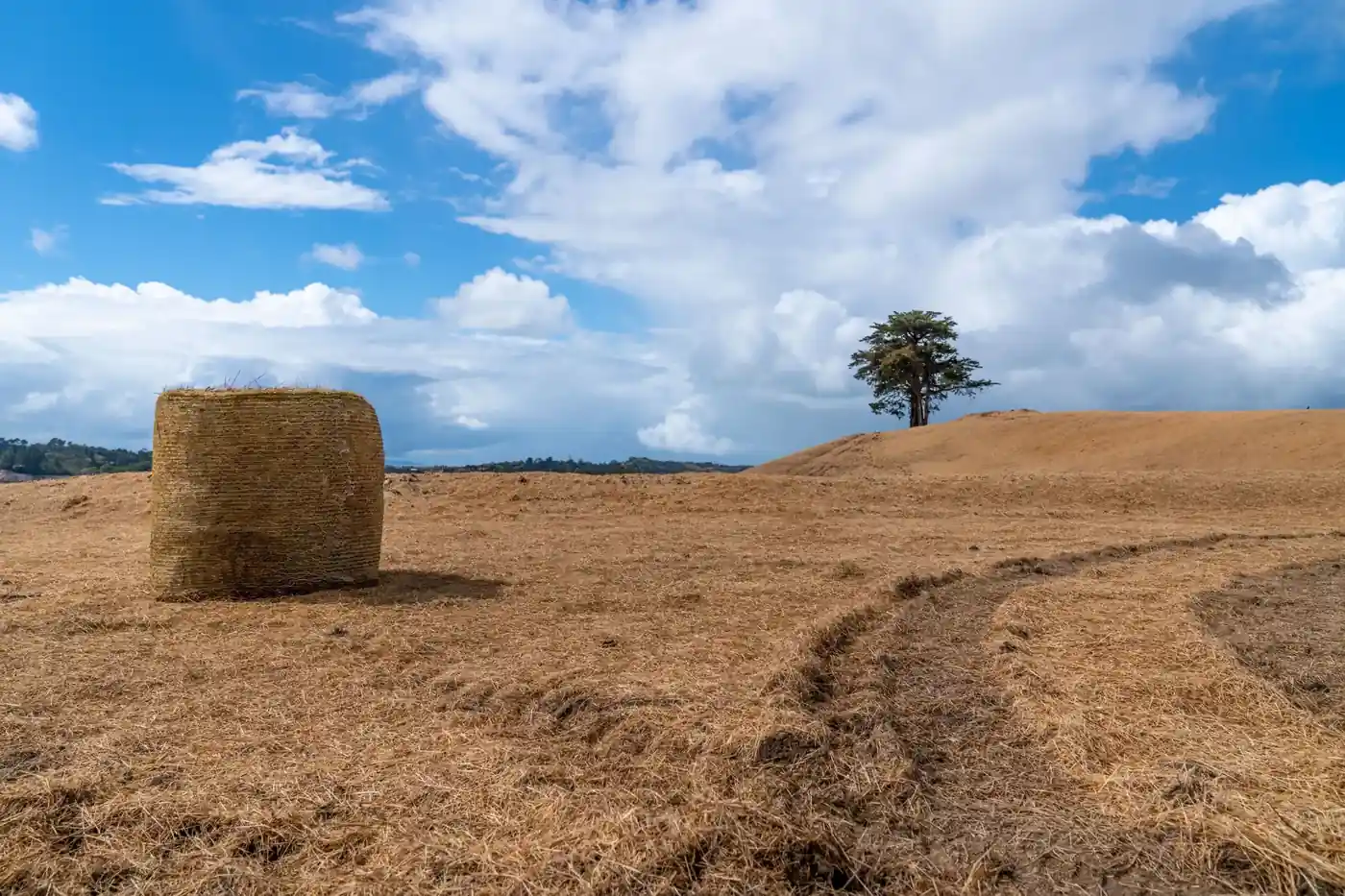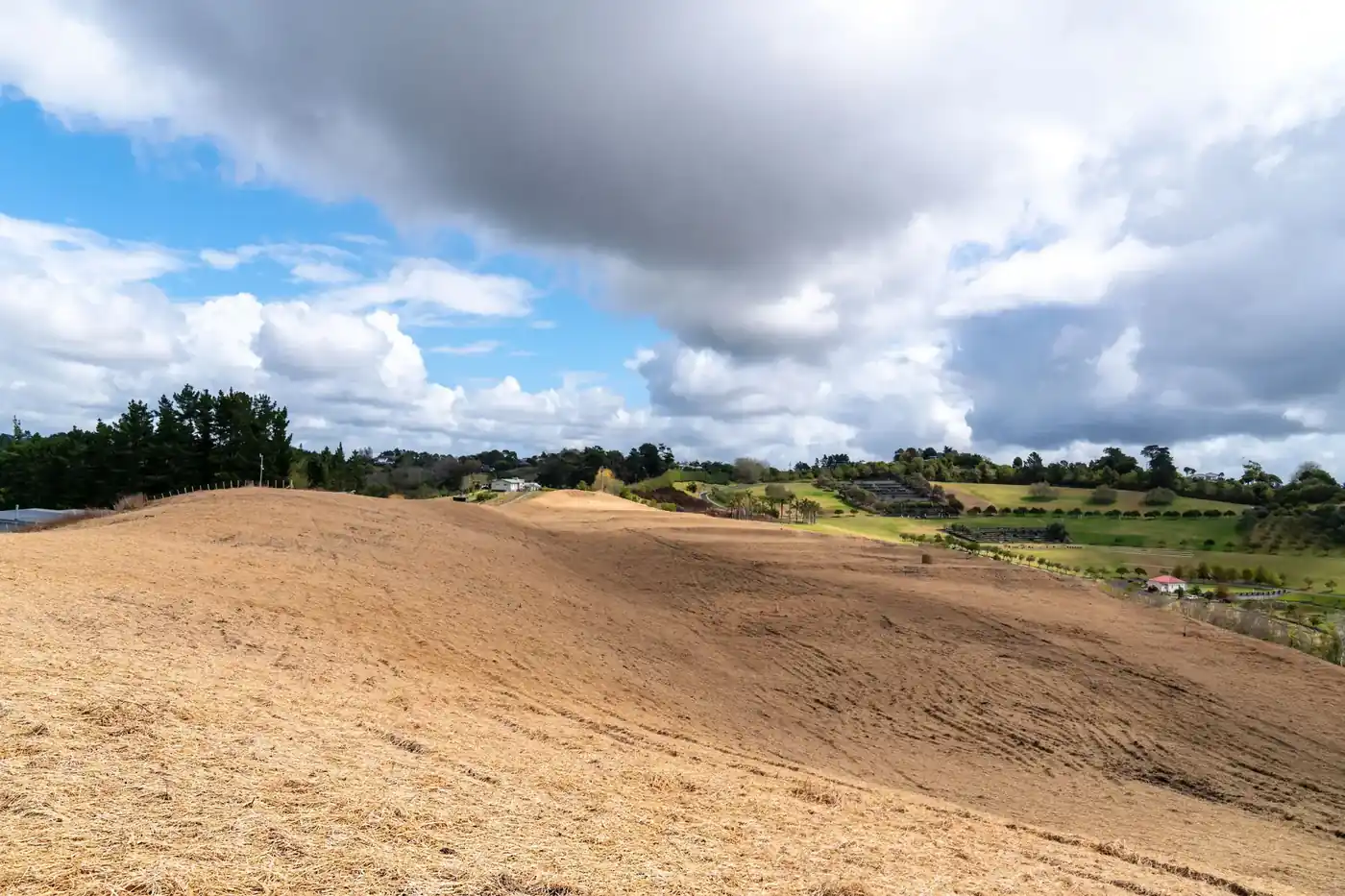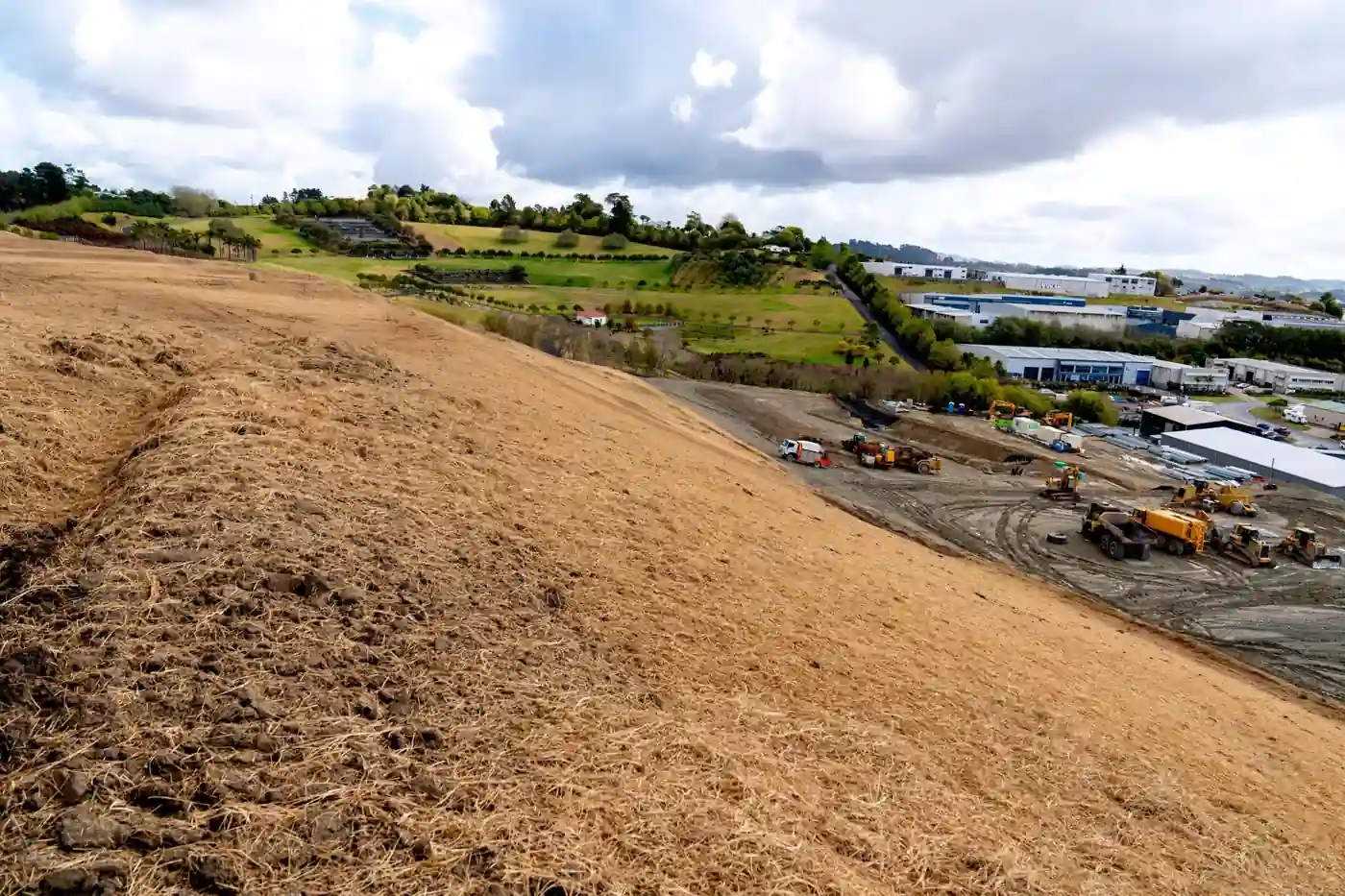

That mat does several things at once. It shields the soil surface from raindrop impact and wind, which is where most surface erosion starts. It creates a microclimate of even temperature and moisture at ground level. And because the weave is open rather than sealed, light and water still reach the seedbed beneath it — so the seed germinates through the mulch rather than under it.
Establishing outside the season
This is the real advantage. Straw mulch holds temperature and moisture steady enough that new grass can be established year round, including through periods when a bare seeded surface would simply fail.
For sites racing a winter shutdown, or stabilising ground in the cold months when grass will not strike on its own, that changes what is achievable. It also protects seed from frost, and from drying out in sun and wind at the other end of the year.
Straw mulching works alongside our other methods — over hydroseeded ground or conventionally sown areas, adding protection while the grass comes away underneath.
Blown or hydraulically applied
We apply straw two ways, and they suit different sites.
Blown straw, described above, lays a thicker, loftier mat and is the method of choice wherever a blower truck can reach the ground and get close enough to place it accurately.
HydroStraw, our hydraulically applied straw, carries chopped straw in a slurry through a hose — reaching ground a blower cannot, and bonding the straw down on exposed sites where loose straw would blow away.
Same material, different delivery. We will tell you which your site needs.
What straw is good for
- Surface protection on accessible ground
- Erosion and sediment control
- Dust suppression on exposed surfaces
- Moisture retention through establishment
- Out-of-season germination
What to know before specifying it
Straw needs full cover to do its job, and it needs anchoring — either crimped into the surface or held with a tackifier — or wind and rain will move it. Under GD05, mulch counts as stabilised only while 100% surface cover is maintained, with reapplication once the cover thins.
It can also introduce weed seed depending on source, which is why we use wood fibre where a clean species outcome matters. And like any mulch it is a sheet-flow product — it does not belong in a channel carrying concentrated flow.